AI Chat for Learners

Creating Scenarios & Tackling Skills Gaps with AI Chat

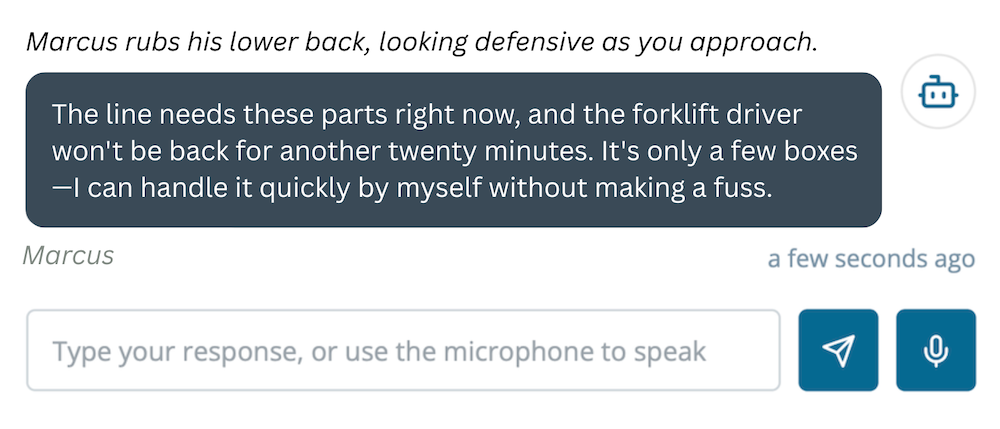
Practice chat with AI bot in learning environment, screen shot of how this looks in the vlearning platform
AI Conversation Practice Factory Health and Safety Example

What Is AI Chat for Learning?

Conversation plays a key role in practising the application of learning. With the vLearning AI chat now you can set up conversations to deal with specific workplace scenarios and create characters with their own challenges and moods to enable a safe practice environment for your learners.

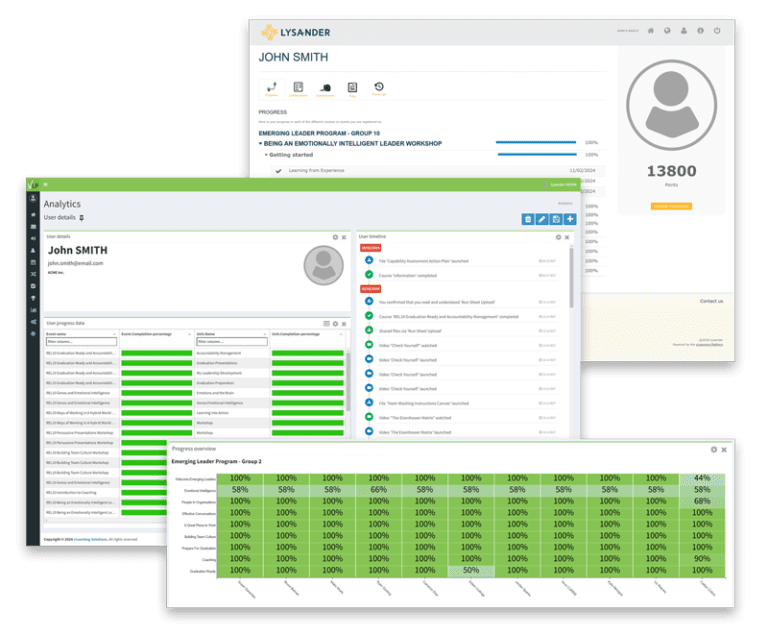
Formal training tells people what good looks like. AI Chat lets them practise it, as often as they need, before it matters at work.

What Makes AI Chat so Impactful?

Scenario-led Learning Practice

The designer writes the brief and the character. The conversation then adapts to what the learner actually says, rather than following a fixed script.

Type or speak your chat input

Learners respond in their own words, by keyboard or by voice. There are no multiple-choice answers to game.

Safe to practise

Mistakes carry no real-world cost, so learners can try different approaches and build confidence before the conversation counts.

What the learner sees

The learner reads the scenario, then the character opens the conversation in role. From
there the exchange is theirs to shape, one message at a time.

Private and one to one

Each conversation belongs to the learner alone. The platform plays the other person.

In their own words

Replies are typed or spoken aloud, and the character answers each one in role.

A record to keep

When the conversation ends, the full transcript can be downloaded as a record.

Practice chat with AI bot in learning environment, screen shot of how this looks in the vlearning platform

Scenarios tuned to the outcome

Behind each AI Chat sits a short brief written by the instructional designer. Setting one up is a matter of filling in a simple form: a few short fields shape who the character is and how it behaves, so the practice maps onto a specific learning objective. Think of it as directing an actor before a role-play.

Name

The character is given a first name. The learner addresses it directly, and the exchange reads as a conversation between two people rather than a chat with a tool.

Role and relationship

A job role or relationship to the learner, line manager, direct report, customer, sets the power dynamic the designer wants rehearsed.

Mood and attitude

A starting mood, defensive, anxious, frustrated, sets the emotional tone and how the character reacts as the conversation unfolds, so difficulty can be matched to the learner’s level.

Scenario and key facts

The situation and the facts the character knows. Sensitive details are held back for the learner to draw out through good questions, rather than volunteered straight away.

Location

 A physical setting, a private office or a shop floor, guides the character’s responses and the small cues of body language that ground the scene.

Together these turn a blank chatbot into a believable person in a specific situation. The character also holds a firm line: it will end the conversation.

Skills Gaps Tackled Automatically with AI

The platform’s conditional rules and learner tracking can present a different AI Chat scenario to each learner, based on what they have already completed or how they performed earlier in the workflow. The same point in a programme can lead to many different conversations, each one matched to the learner and all managed automatically.

Why AI Chat Lands with Learners

Practice, not theory

Reading about a difficult conversation and having one are not the same skill. AI Chat turns knowledge into something the learner has done.

Repeatable on demand

No facilitator to book and no peer to partner with. Learners run the same scenario as often as they like, whenever they choose.

Consistent for everyone

Every learner meets the same character, briefed the same way, so a cohort gets a fair and comparable experience.

Pressure without the stakes

The character pushes back in role, so practice feels real, but a misjudged sentence costs nothing more than another attempt.

Give your learners the vLearning experience