


5 Things Stopping Your Learners from Applying Their Learning (And How to Solve Them)

Introduction: The Costly Gap Between Knowing and Applying
The dashboard glows with 100% completion, but when you talk to managers, they’re just not seeing a real change in behaviour.
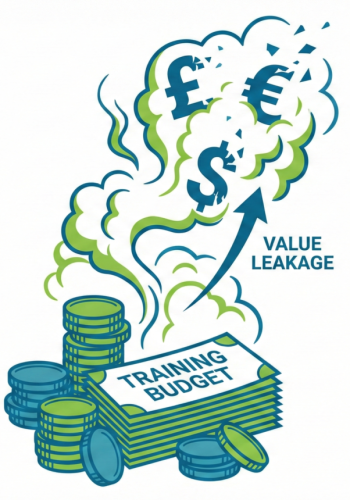
That gap between completion and workplace application is a direct hit to productivity and the ROI of your investment. It’s the source of that constant pressure to prove the real value of your work.
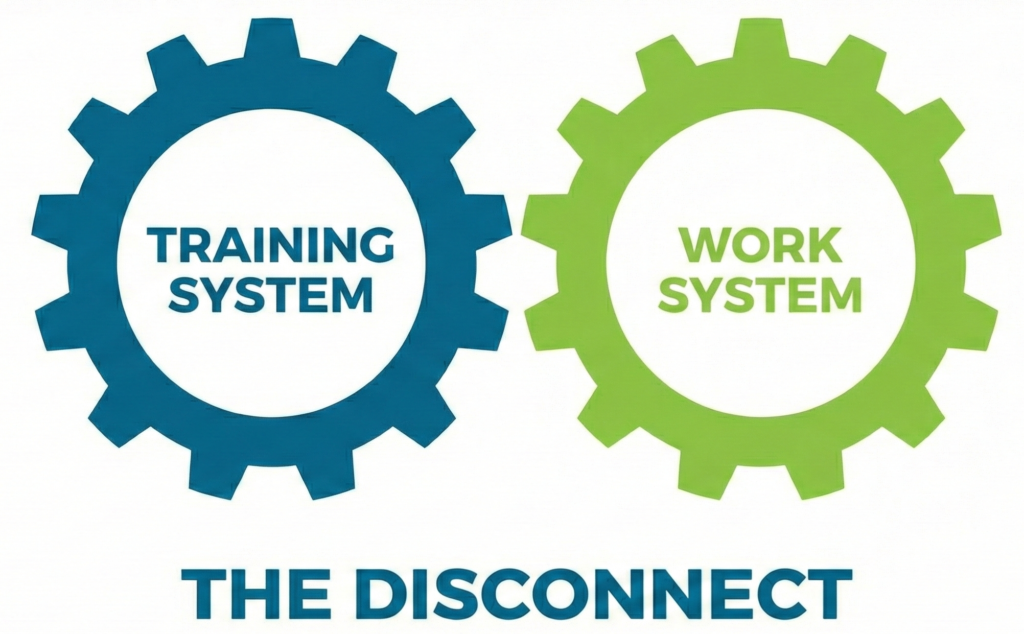
But here’s the thing: it’s almost never the learner’s fault. The problem is usually the system-level barriers you’re all working within.
L&D Professionals are often forced to treat learning as a one-off ‘event’, but learning isn’t course attendance, it’s a change in thinking and behaviour.
At vLearning we work with learning professionals to identify what really gets in the way of performance improvements. Here are five common barriers we’ve seen stop learning from actually being applied in the workplace, and some practical steps that can be taken to start fixing them.

Assess the gap between Learning Investment and Business Impact in your Company.
Barrier 1: Measuring Completion, Not Capability
The Problem: Most platforms force you to measure “modules completed” because that’s all they can track. It’s the metric that’s available. The real struggle is trying to prove capability when our systems are built to count clicks. What if we shifted our focus? Moving from completion to capability.
How To Solve It: Simple, practical validation steps make all the difference. Things like a short simulation, a line manager “sign-off” confirming they’ve seen the new skill in action, or a peer-review challenge. It’s just about finding a way to measure the application, not just the attendance.
Barrier 2: The Learning is an "Isolated Event"
The Problem: A two-day workshop or a one-hour webinar, delivered and then forgotten. This “one-and-done” approach ignores everything we know about the brain. Without reinforcement, learners forget most of what they learned very quickly because the learning is isolated from daily work tasks.
How To Solve It: When we reframe learning as a continuous process, the formal training is just one part. By looking at learning as a workflow in which we can reinforce and build on learning over time, we create a much stronger connection to workplace application. A guided series of different learning activities, such as a practice exercise, followed by a micro-learning nudge, and then a coaching session with a manager, and a checklist to use on the job is more effective than formal training alone.
Barrier 3: Learning Tech is not fit for purpose
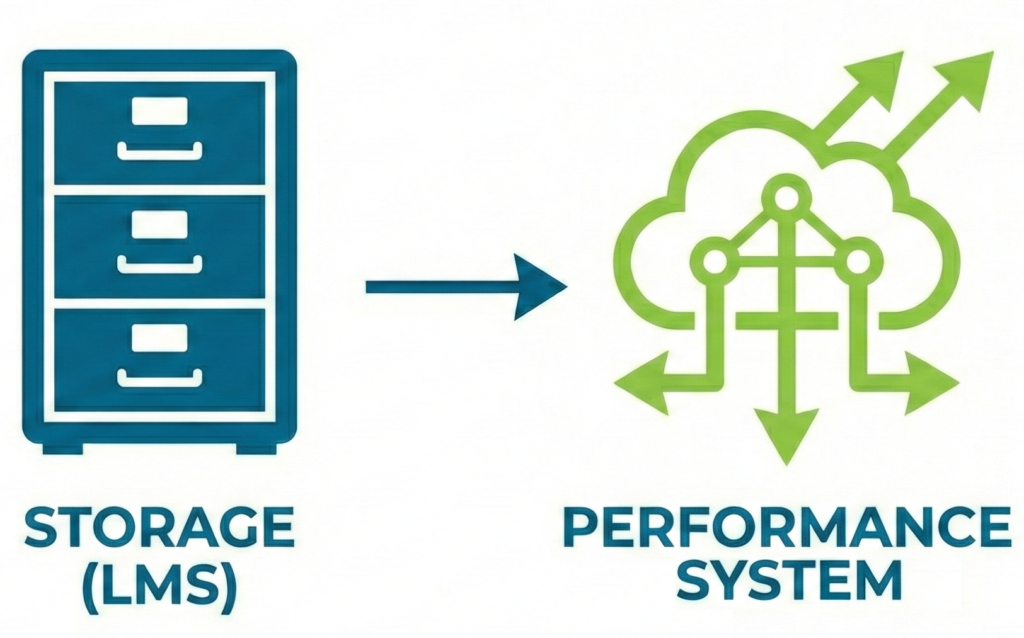
The Problem: The standard LMS is great at what it was built for – being a digital filing cabinet to store and track formal courses. Live online learning is conducted in a separate system. Social learning, knowledge sharing and content submissions need further separate systems. But libraries of courses accompanied by disjoined systems don’t support the transition from isolated learning activities to contextual workplace application. These systems live completely outside of where the real work happens. It can feel less like a bridge to performance improvement and more like a barrier.
How To Solve It: Shift from a “content library” and disparate learning tools to a “performance focussed” model in one coherent learning workflow. A workflow that helps people actually apply the learning in their job, over time. It’s a big change in design. It means thinking less about independent activities and more about creating journeys that enable application, support ongoing improvement, and finally prove the impact.
Assess the gap between Learning Investment and Business Impact in your Company.
Barrier 4: Support is Available, But Not Findable
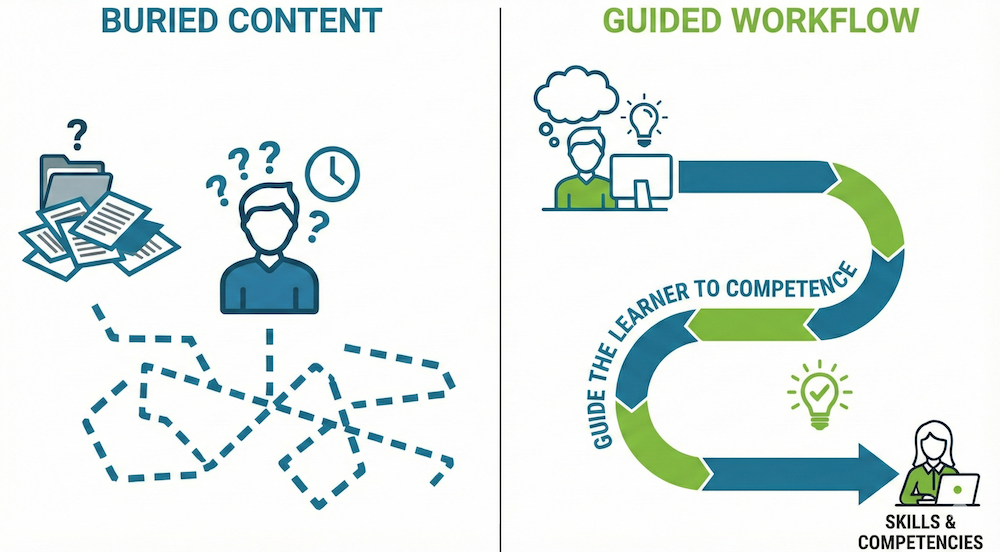
The Problem: The LMS library doesn’t know what learning activity “Sarah” in sales needs as part of her PDP Goal to practice her new sales call technique. Nor does it recognise when Mark in “Operations” has been using a new piece of software for 6 months so it can’t recommend relevant learning. An LMS relies on the learner to hunt through a maze of folders for the right answer. Worse, they’re juggling multiple systems to find the learning they need, from their wiki, their CRM, to Google or Chat GPT. The right support is never provided to the right person at the right time.
How To Solve It: We’re all looking for a way to organise and automate the entire learning experience in one place. Imagine a system that lets us pull all those activities—formal e-learning, practice assignments, expert support, performance tracking—into one seamless, structured workflow that guides the learner over time.
The goal is to be able to map job roles to skills and competencies, then align all of it into a clear path where people can see exactly what they need to do to move forward.
Barrier 5: There's No Clear Path from 'Learn' to 'Apply'
The Problem: You’ve built practical scenarios into the design. But when learners return to their desks, there’s no connection between what they learned and what they need to do next. The learning platform doesn’t bridge that gap.
How To Solve It: Design for application from the very beginning. Every module should end with a “Now, you go and do this” action. Use real-world scenarios, simulations, and actionable playbooks. Crucially, brief the line managers. Ensure they are equipped to set expectations and create immediate opportunities for the learner to apply their new skill in a real, low-risk environment.
Learners aren´t applying their knowledge and this isn’t their fault, it’s the barriers from systems not working together. By moving beyond vanity metrics, breaking down isolated events, and integrating learning more closely with work tasks, you can finally close the knowing-applying gap.
Assess the gap between Learning Investment and Business Impact in your Company.
Share this Article
X
LinkedIn
Related Resources