


3 Actions to Connect Learning Directly to Performance

Introduction: Closing the 'Knowing-Applying' Gap
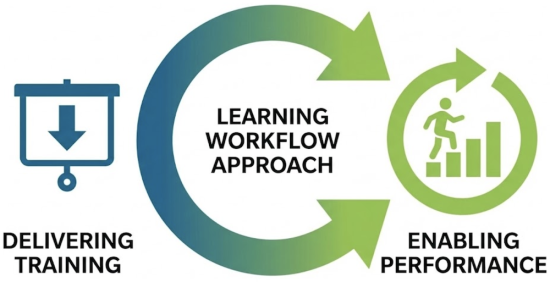
In our last article, we identified the key barriers that stop learners from applying their learning. We explored how you can fundamentally shift your thinking from “delivering training” to “enabling performance” by implementing a learning workflow approach. An approach that enables a continuous learning process where learners can build on and apply their learning over time.
But how do you create learning workflows that successfully enable the shift from isolated learning activities to performance improvements in the workplace? Here we explore three key actions of executing an effective workflow in your place of work.

Assess the gap between Learning Investment and Business Impact in your Company.
Action 1: Map learning to Work
The Problem: We treat learning as a separate task. An employee stops their real work, goes to the LMS, takes a course, and is then expected to transfer that knowledge back into their work.
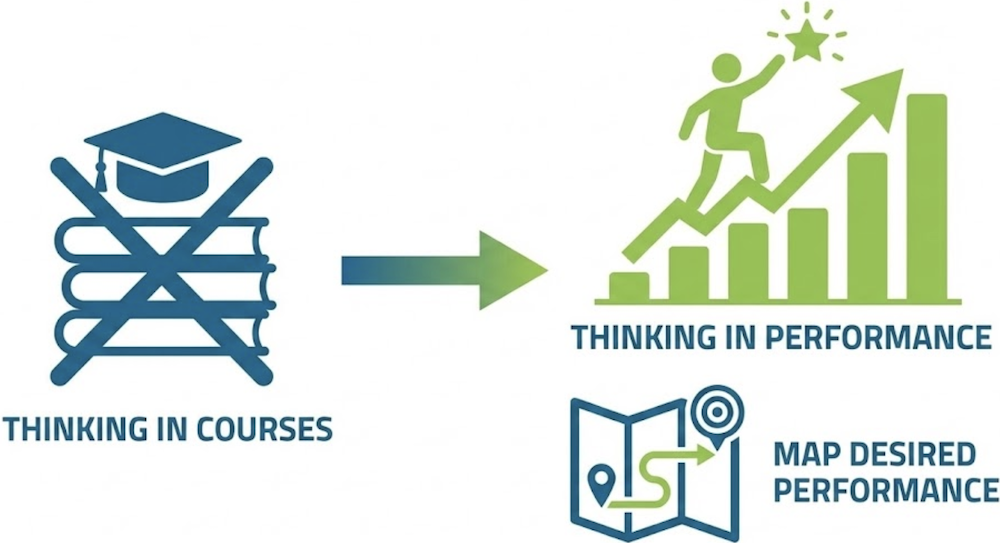
The Solution: Stop thinking in “courses” and start thinking in “performance.” Before you launch any training, map out the actual desired level of performance improvement you want learners to achieve. Where do they get stuck? What “moment of need” will this learning solve? Then, design the learning to support that specific moment.
Essential Planning Steps:
- Identify the Trigger: What performance needs are required for different roles? What performance behaviours trigger a learning need?
By doing this you can create grouped needs, such as new starters, or compliance. You can also link to business goals such as 90% accuracy in CRM data, or that application of a 3 step sales technique for your sales team.
- Identify the goal: Within each of your groups, what specific change in performance do they need to evidence in the workplace, and how do these expectations link to the goals of the business? How will this new behaviour be identified in their day to day tasks?
For each trigger, define the one successful action or behaviour required. This is not about prescribing a course, it’s about identifying the most impactful intervention needed. If the trigger is “price objection,” the goal is: “The sales rep correctly uses the 3-step ‘Listen, Validate, Reframe’ technique.” This successful action is the measurable goal.
- Identify the proof: Identify how you can assess the extent to which learners are reaching their performance goals.
Can they prove the application of the 3-step sales approach in a video submitted role play with the team? Can they answer a set of questions on company policies? Does peer coaching feedback show a growth in understanding? This proof of application approach will help you to build a means to assess performance outcomes from the learning.
- Ongoing improvements and reinforcements: Consider the regularity in which you need to check in on the ongoing application of the learning and where you would need to provide reinforcements to sustain these performance improvements.
This is where you build the workflow to make the learning stick. Map out the automated follow-ups that will sustain the new behaviour after the trigger event.
Action 2: Real performance improvement happens through practice, reflection and application.
The Problem: Once you’ve mapped out what skills improvements need to happen and how to assess these improvements, are you going to deliver a series of isolated learning activities? We’ve already discussed the disconnect between performance improvements and isolated learning activities.
The Solution: To enable the follow through from learning to performance outcomes, you must create a workflow, a series of learning activities that leads learners from understanding, to applying. Combine your training courses and resources with performance-focused activities that show measurable improvement. You can design and deliver more impactful learning interventions by adding performance-based exercises, expert guidance and on-the-job tasks to your training. Real performance improvement happens through practice, reflection and application.
Key Aspects to Include in Your Workflow:
- Training: The courses and training resources you provide should be clearly linked to the triggers, goals and proof you’ve mapped out from action 1. Try to combine e-learning, live sessions and reference materials in one space. This avoids the problem of making your learners hunt across different systems. And group courses and resources together that relate to the same subject and context. This makes them logical and intuitive for learners, and increases their impact.
- Practice: Give learners structured opportunities to practise new skills before applying them in their actual roles. Create practice assignments that mirror real situations, role-playing or simulations. Space practice sessions over time so learners revisit and repeat key skills. Spaced repetition builds confidence, embeds capability, and helps skills stick.
- Reflection: Help learners pause and think critically about what they’re learning and how it applies to their own work context. Guide them through structured reflection activities like journaling and self-perception inventories. Enable coaching and mentoring sessions for personalised guidance to clarify understanding.
- Application: Facilitate and capture performance improvement by guiding people through on the job tasks and work related assignments, from surveys to webcam recordings, submitted evidence of completed work, assessment sessions, or manager feedback. Use this to identify sticking points and areas of further development needs. Automate performance assessments on an ongoing basis to identify skills regression and provide interventions when they are needed.
Action 3: Introduce and Automate 'Learning Workflows'
The Problem: It’s possible that your LMS does not enable the easy application of a workflow approach and your system is confining you to the delivery of autonomous events. That your system is preventing you from building the journey to performance improvements that your learners need. To add to this, manually sending follow-ups, involving managers, and administrating learning interventions for the performance needs of every learner is time-consuming and simply doesn’t scale. You don’t have the time.
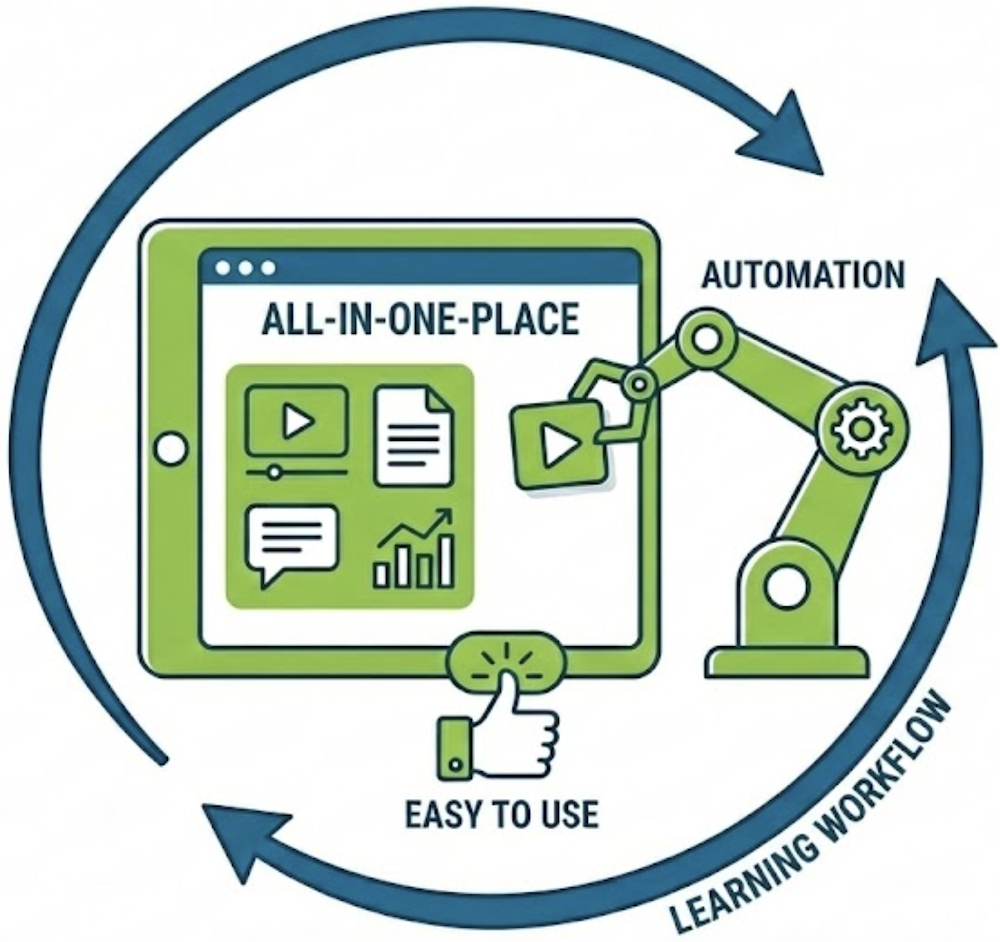
The Solution: To make the workflow approach possible you need the right technology. You need to be able to create an easy to use, all-in-one-place learning application platform. You need to be able to automate the learning workflow at every stage, using an intelligent sequence of nudges, resources, and validation steps that guides a learner from initial knowledge to proven capability over time. This is the “how” that underpins Actions 1 and 2.
How a Learning Workflow Should Look:
Instead of a single “course,” a learning workflow system manages the entire process:
- Learning Workflow for a Specific Performance Improvement Need (Simple Example): Your learners have a journey to performance improvements visually mapped out and easy to follow. It includes a series of learning activities from micro-learning videos to an eLearning module, and an online webinar, with automated communications and reminders. This is followed by a team workshop, an online roleplay then a workplace assessment.
- Reinforcement of Behaviours as Part of the Workflow: Once learners demonstrate practical application in the workplace, use automation to monitor and sustain these new behaviours. The platform automatically pushes a checklist to the learner, later followed by a quiz. Depending on the score the learner achieved in the quiz, they may be sent a reminder learning activity and asked to submit a video roleplay. 2 weeks after the role play is submitted, there´s a coaching session with a peer to review the video.
- Tracking: In the platform you can clearly see the progress of each learner, where they are within the workflow and how they are scoring on tests as well as qualitative feedback from peers. See evidence and confirmation that the performance improvement had been achieved, or sticking points before they become a problem.
By automating this sequence, you ensure that learning isn’t a single event but a continuous, supportive process that is embedded directly into the daily rhythm of work, guiding the learner to mastery.
Assess the gap between Learning Investment and Business Impact in your Company.
Conclusion: From 'Training' to 'Application'
Connecting learning to performance isn’t just about better content, it’s about how learners apply learning in the workplace . By mapping learning to the job, and using learning workflows to automate the journey, you shift the focus from “completion rates” to “performance.”
Assess the gap between Learning Investment and Business Impact in your Company.
Share this Article
X
LinkedIn
Related Resources
